Topics

April 8, 2026



April 8, 2026
When a study involves many participants, multiple activities, shifting timelines, or different tools, it doesn’t take much for things to get complicated. Even well-designed projects can start to break down if participants lose track of what’s expected or when things are due.
In my experience as a Research Advisor, I’ve seen this happen often, especially with multi-part studies. Combining methods can unlock deeper, more contextual insights. But without the right structure and communication, participants may struggle to stay engaged and provide meaningful input.
The good news is that with the right approach, complex studies don’t have to feel complicated for you or your participants.
Without further ado, let’s dive into complicated participant management!
When running a multi-part study, it’s important to intentionally build in frequent touch points to keep participants aligned, engaged, and on track. Because these studies often span multiple activities, tools, or timelines, it’s easy for participants to lose context or miss steps without consistent guidance.
Setting up these touch points can take extra effort. It requires planning ahead, coordinating across different parts of the study, and maintaining clear communication throughout. But the payoff is significant.
Frequent check-ins help reinforce expectations, clarify what’s coming next, and reduce confusion as participants move through the experience. More importantly, they give participants the time and context needed to provide more thoughtful, higher-quality responses.
“By clearly communicating deadlines and expectations, you help participants plan their participation accordingly, which means they have time to provide quality responses.
- Lexi Lyonhill, Onboarding Specialist, Dscout
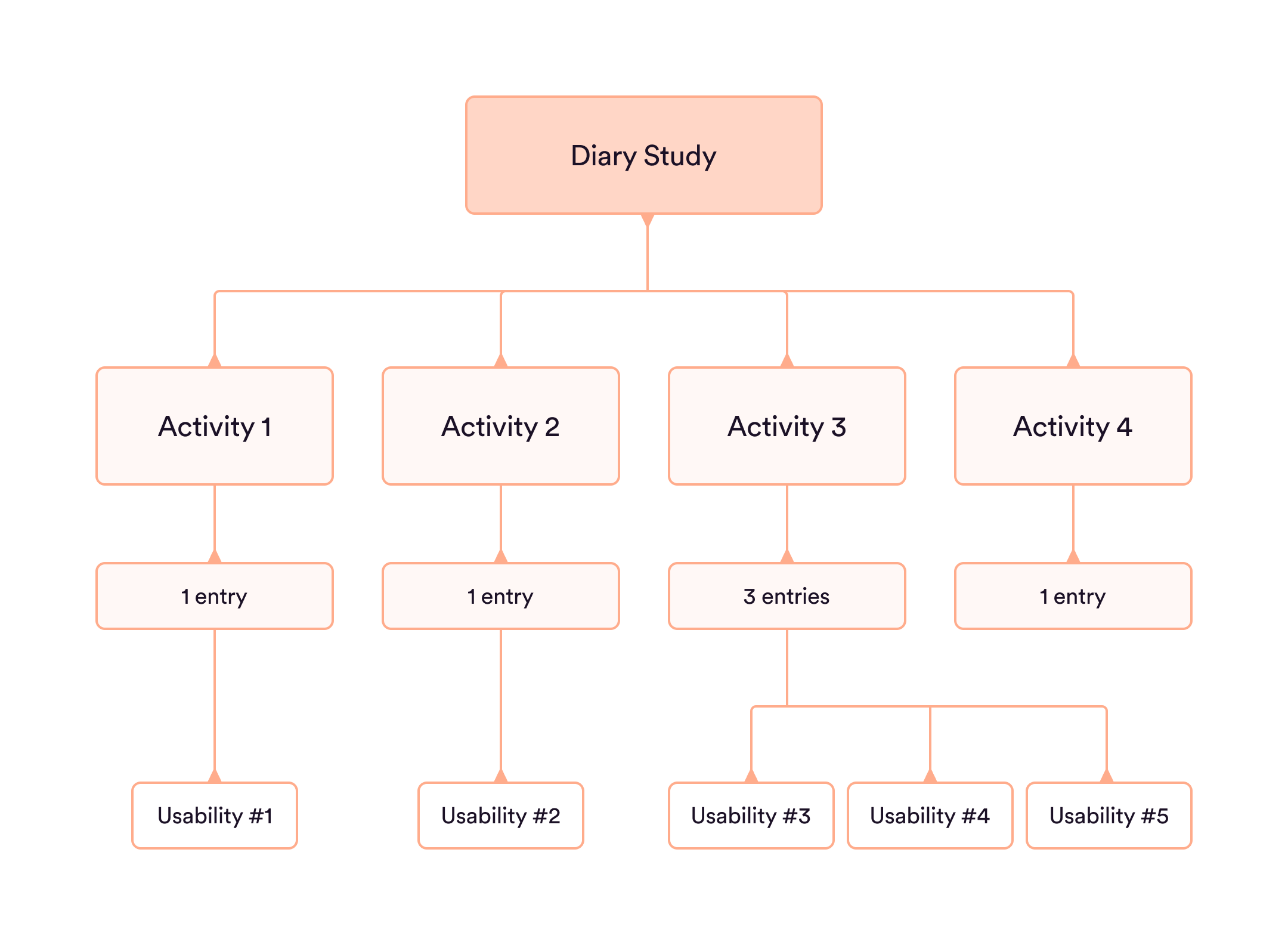
Imagine you're a researcher looking to speak with participants who are practicing nurses in Montana. Specifically, you want to capture:
As a result, you can structure the study like this:
Create a central place where participants can engage over time, receive instructions, and ask questions. This is also a good place to collect introductory context—such as video or written responses that help you better understand participants and confirm they’re a strong fit.
Use external tools or structured exercises (like card sorts or workflows) to capture how participants actually interact with content or experiences. Then, follow up with reflection questions to understand the “why” behind their actions.
Invite a subset of engaged participants to join moderated sessions where you can observe behavior in real time and ask follow-up questions. This is especially useful for testing early concepts or digging deeper into specific reactions.
The goal is to design a system where each method builds on the last. This balances flexibility with a clear, guided experience for participants.
For a study like this to run smoothly, participant management needs to be just as intentional as the research design itself. Many will move through them on their own, but some may need a bit of extra guidance along the way. To help your research run smoothly, and ensure you receive high-quality responses, here are a few ways to set yourself up for success:
Before launching the project, it helps to schedule a kickoff call to walk participants through the structure of the study and set expectations. This gives participants a chance to ask questions about the timeline, technical setup, or tools ahead of time. That’s especially useful when working with external participants who may be less familiar.
With multiple moving parts across studies, it helps to maintain an external hub where you can track progress and manage participants throughout the project.
To help you get started, we put together a downloadable, customizable template, The People Nerds Participant Management Tracker if you want to grab a copy!
Before launch, make sure all parts of your study are coordinated and easy for participants to navigate.
When approaching a complex, multi-part study, it helps to start by clearly defining your research vision—even if the execution isn’t fully figured out yet. From there, break the project down step-by-step, mapping each research objective to the method or tool best suited to capture that input. This makes the overall structure more manageable and ensures each component of the study has a clear purpose.
As you build, focus on designing an experience that balances complexity with clarity. Multi-method studies can quickly become overwhelming for participants, so it’s important to think through how everything connects—from sequencing activities to setting expectations upfront. A well-structured plan not only supports your research goals, but also makes it easier for participants to stay engaged and provide thoughtful responses.
Finally, once the study is live, strong preparation pays off. With the right foundation in place (e.g. clear communication, organized workflows, and intentional design) you can run even complex studies with confidence.
The key takeaway: complicated participant management doesn’t have to mean complicated execution. With thoughtful planning and a flexible approach, ambitious research designs can run smoothly and deliver the rich insights you’re looking for.

Grab a copy of "The People Nerds Participant Management Tracker" to easily keep of all your participant communications.